 Oluwadi
Investigating the Overlooked
Region
What
Who For
Analysis
Oluwadi
Investigating the Overlooked
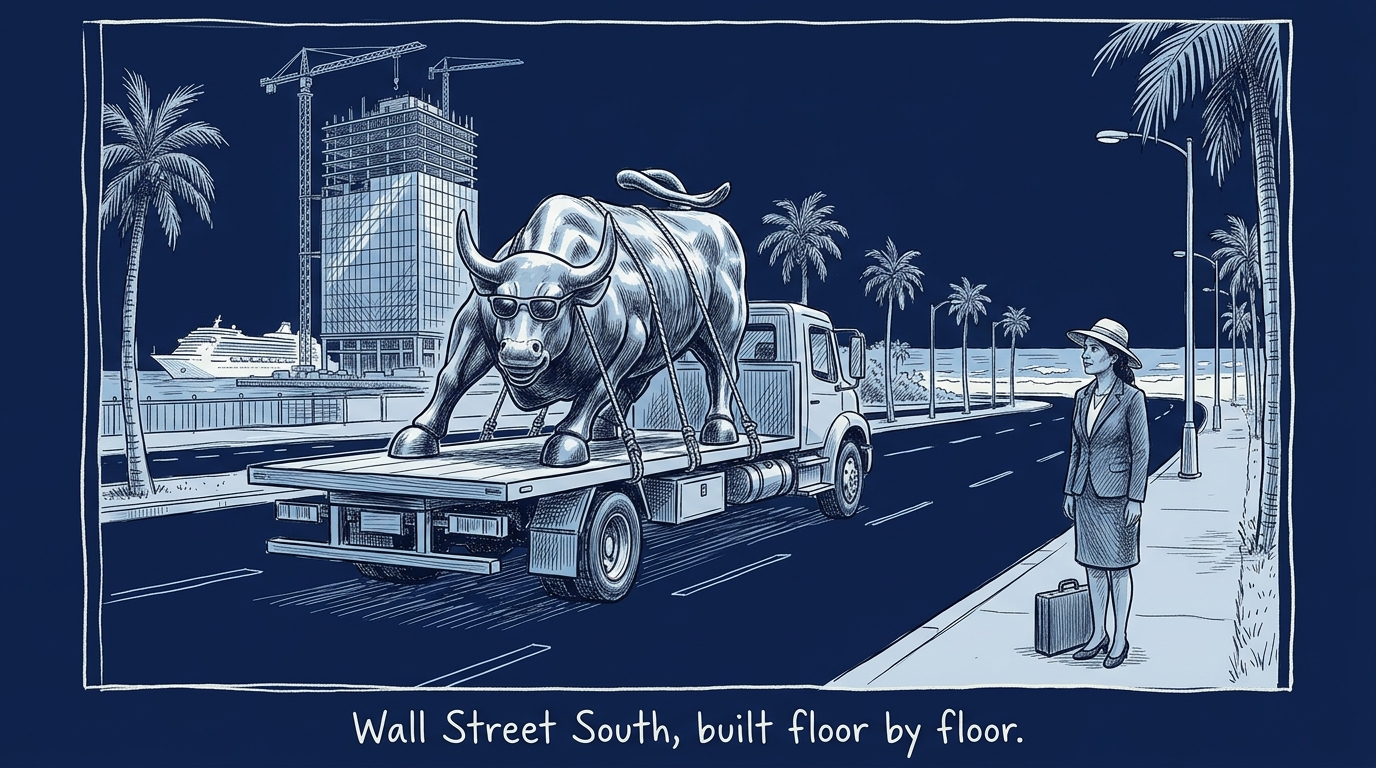
Citadel, Ken Griffin's $67 billion hedge fund, relocated its headquarters from Chicago to Miami in 2022. Griffin didn't rent space and call it done — he paid $363 million for a 2.5-acre waterfront site in Brickell and is building a 54-story tower to house Citadel and Citadel Securities' headquarters, having already moved operations into 830 Brickell in 2024 while the tower goes up.[1] Griffin has said plainly that he thinks Miami can overtake New York as the financial capital of the world.[1]
It isn't a one-firm bet. Point72, RBC Capital Markets, and Thoma Bravo all now have real Florida presence, part of a genuine cluster the local press has started calling "Wall Street South" — pulled south partly by Florida's lack of a state income tax, the same structural draw that's pulled companies to Delaware, Texas, and Wyoming for entirely different legal reasons in pieces already on this site.[1]
Miami's other global-scale identity has nothing to do with finance. PortMiami calls itself the Cruise Capital of the World, and the numbers back a real claim, not just a slogan: 8.56 million cruise passengers in its record fiscal year, an annual economic impact of $61.4 billion, and 340,078 jobs supported — about 4% of Florida's total GDP running through one port.[2] The title itself is contested — Port Canaveral has recently pulled ahead in raw passenger count — but PortMiami's economic footprint holds regardless of which port technically wins the passenger count that year.[2]
Two Miamis, both real, both operating at a genuinely global scale: a hedge-fund capital being built floor by floor in Brickell, and a port moving more cruise passengers and economic output than most countries manage in a year. Neither one is the tourist-beach version of the city most people carry around in their head.
The same pull, a different mechanism. Delaware Is Home to 67.6% of Fortune 500 Incorporations is the same underlying story: a jurisdiction structuring its own rules specifically to pull corporate presence toward it. Delaware built it into corporate law itself; Florida built it into personal and corporate tax policy. Different tools, same result — a state government deciding it wants to be a company's home, and building the conditions to make that the rational choice.