 Oluwadi
Investigating the Overlooked
Region
What
Who For
Analysis
Oluwadi
Investigating the Overlooked
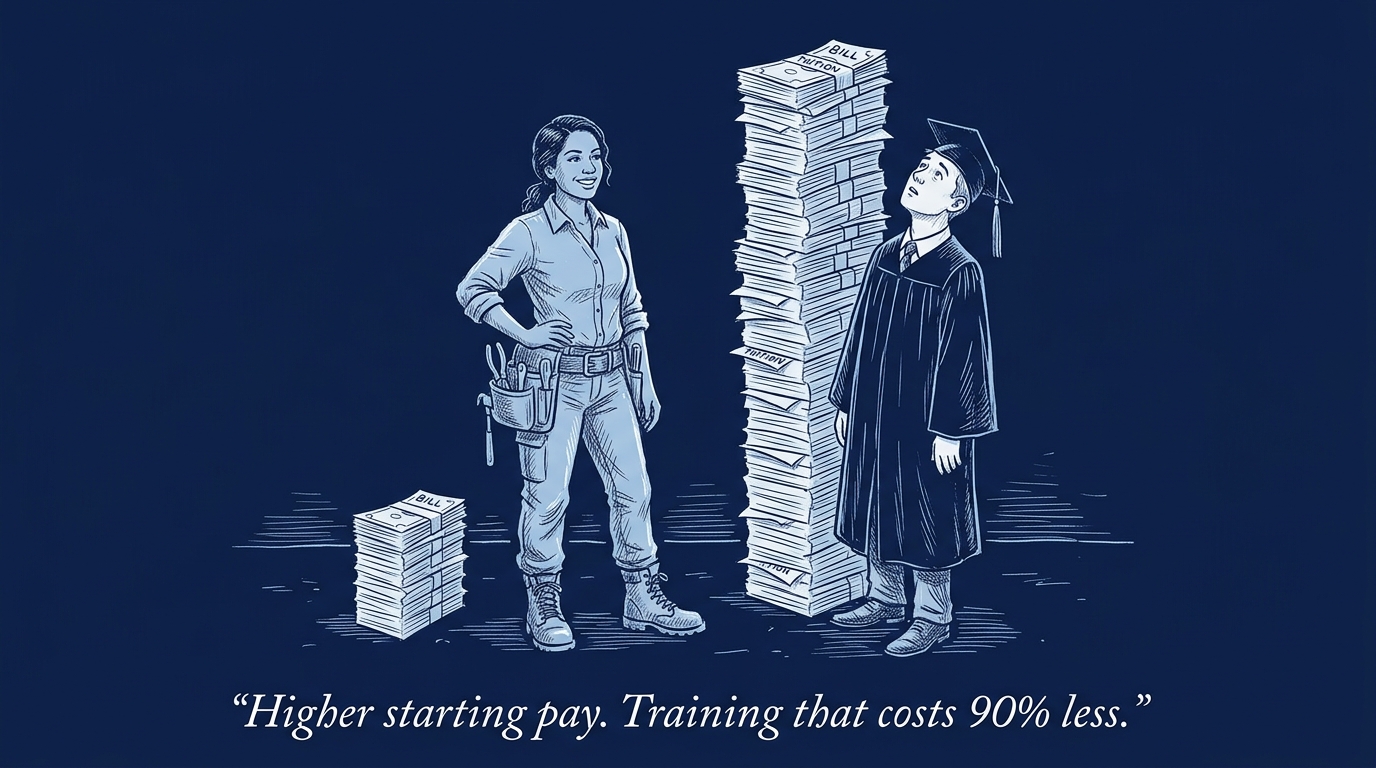
Start with the number that inverts the assumption before anything else. The average starting salary for a 2025 college graduate was $59,384, according to the National Association of Colleges and Employers.[1] The average salary across trade occupations is $68,480 -- higher.[1] This is not a comparison between the best-case outcomes of one path and the worst-case outcomes of the other. It is the plain average of each, and the trade average wins.
The cost side of the comparison is not close. Trade school certificate or diploma programs typically run $5,000 to $15,000 over 6 to 18 months; community college technical associate-degree programs run $7,000 to $20,000 over two years.[1] A four-year public university averages roughly $110,000 in total cost of attendance; a private university exceeds $230,000.[1] Trade training costs 70-90% less and starts producing income two to four years sooner -- the average electrician, plumber, or HVAC technician breaks even on the entire cost of their training within one to two years of finishing it.[1]
Some individual trades clear six figures outright, not as an outlier case but as the median. Elevator installers and repairers earn a median $99,000. Commercial pilots average $130,440. Dental hygienists average roughly $76,000-$83,000. Radiation therapists average $91,410. Electricians average around $60,000-$61,590.[1] None of these require a bachelor's degree. All of them require a real, specific, learnable skill and a certification most people never look into because the word "trade" carries a status assumption the actual paycheck doesn't support.
The salary comparison alone understates the gap, because it ignores where each path actually starts. The average 2025 college graduate who borrowed carries $39,375 in student loan debt; the median borrower carries $20,281, and bachelor's graduates of public universities specifically average $29,490.[2] A college graduate typically starts their working life tens of thousands of dollars underwater before their first paycheck clears. Many trade apprenticeships run the opposite direction entirely -- paid positions, earning a wage while training rather than accumulating debt for it, so the graduate reaches the same day-one-of-real-work milestone with savings instead of a starting deficit.[2] The $68,480-versus-$59,384 salary comparison is the smaller of the two gaps. The larger one is how far back each path makes you start counting from zero. None of this argues college is a bad decision -- it argues it is currently the only decision most people are given real numbers for.
A companion piece traces a third, related access path. Trade skills and small-business ownership connect directly -- an electrician or HVAC technician who later buys the company they once worked for, financed the same way, is the same lever run one step further.